
How can vibrating screen mesh improve plant productivity?
Vibrating screen mesh functions as the primary mechanical separator in industrial circuits, where a 3% increase in open area typically yields a 5% rise in overall plant throughput. By utilizing high-tensile materials like SAE 1065 carbon steel, operators maintain aperture integrity under loads exceeding 4.5 G-force, ensuring that 98% of near-size particles are either passed or rejected correctly. This precision directly minimizes recirculating loads, which can otherwise consume up to 15% more energy per ton of material processed in secondary crushing stages.
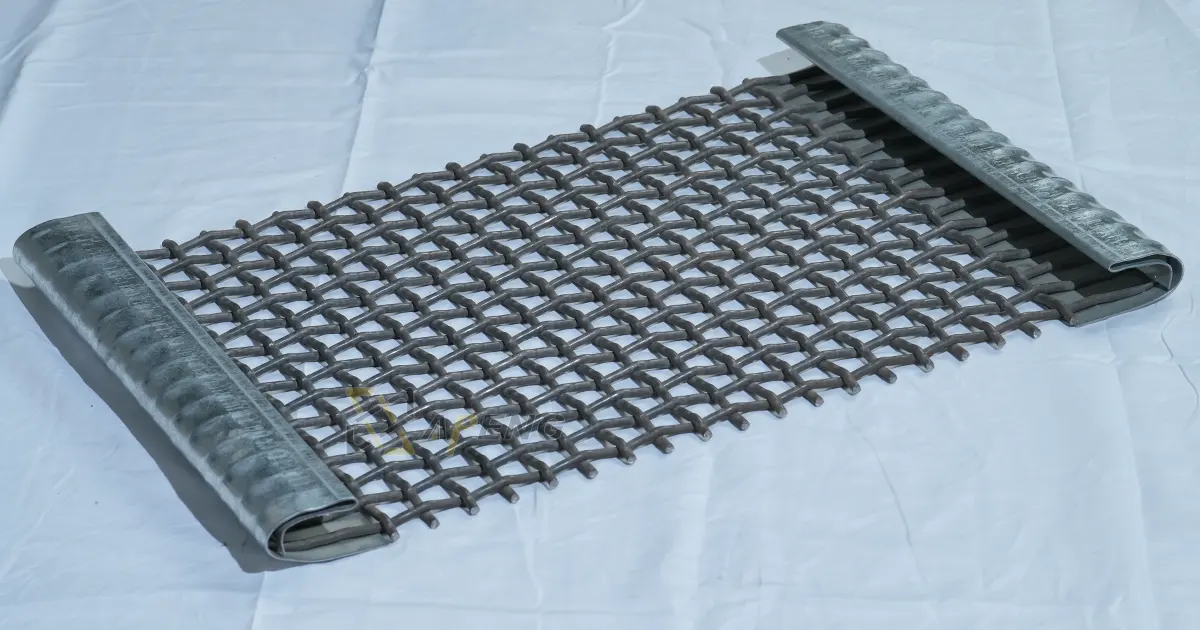
The operational success of any aggregate or mining facility relies heavily on the physical interaction between raw material and the vibrating screen mesh, a component that defines the upper limit of daily production capacity. When a screen surface maintains a consistent vibration frequency of 800 to 1,200 RPM, it prevents the buildup of fines that would otherwise reduce effective screening area by 20% within the first hour of operation.
This mechanical stability leads directly to the necessity of selecting the correct wire gauge, as thinner wires increase the open area but sacrifice the structural lifespan of the panel. Data from industrial field tests in 2024 showed that reducing wire diameter by just 0.5mm can increase the screening surface's capacity by 12%, though it requires a more frequent replacement schedule to avoid breakage.
"A well-configured screen deck acts as a governor for the entire plant; if the mesh fails to clear material at the design rate, every upstream conveyor and downstream crusher operates at sub-optimal efficiency, often leading to a 10% loss in potential daily revenue."
Beyond simple wire diameter, the geometric configuration of the apertures plays a role in handling the specific moisture content of the feed, which often fluctuates between 3% and 8% in outdoor quarries. Standard square mesh struggles with sticky materials, whereas self-cleaning designs—utilizing independent wire vibration—can process up to 25% more volume in damp conditions without requiring manual intervention or water sprays.
The ability to handle these fluctuations is further enhanced by the use of polyurethane modular systems, which, despite a higher initial cost, offer a wear life 4 to 6 times longer than traditional woven wire. In a 2025 study involving copper ore processing, plants that transitioned to high-temp polyurethane saw a 40% reduction in unplanned maintenance stops, directly contributing to a higher "up-time" percentage for the entire facility.
| Material Type | Typical Open Area % | Wear Life (Hours) | Efficiency Rating |
| High-Tensile Wire | 65% - 75% | 150 - 300 | High |
| Polyurethane Modules | 45% - 55% | 800 - 2,500 | Medium |
| Self-Cleaning Mesh | 78% - 85% | 200 - 450 | Maximum |
While polyurethane offers longevity, the maximum throughput of the plant is often achieved through woven wire due to its superior open area, which can reach up to 85% in specialized configurations. This high ratio allows the plant to handle surge loads from the primary crusher without backing up the circuit, a common issue that causes up to 15 minutes of idle time per occurrence.
Effective screening ensures that the secondary crushers only receive material that actually needs further reduction, preventing the "over-grinding" of particles that are already at the target size. When a plant processes 1,000 tons per hour, a mesh inefficiency of 5% results in 50 tons of material being needlessly re-circulated, wasting electricity and increasing wear on crusher liners.
"Field measurements indicate that removing 95% of fines before the secondary crushing stage reduces the energy draw of the crusher motor by approximately 12-18%, extending the interval between expensive liner replacements."
This reduction in recirculating load is particularly important when meeting strict international standards for concrete or asphalt sand, where the passing #200 sieve content must remain below a specific threshold. Achieving this level of precision requires vibrating screen mesh with a tolerance of less than 0.05mm across the entire deck surface to ensure consistent product grading throughout the shift.
To maintain these tolerances, operators must monitor the tensioning of the mesh, as a loss of tension by even 10% can cause the wire to "whip" against the support bars, leading to premature fatigue failure. In heavy-duty applications, using 11-14% manganese steel for the mesh provides the necessary work-hardening properties to withstand the impact of large rocks dropped from heights of 1.5 meters or more.
The longevity of these materials is documented in various industrial benchmarks; for example, manganese panels used in granite processing show a 30% lower wear rate compared to standard carbon steel. This durability ensures that the plant doesn't have to stop for a 4-hour mesh change-out during the peak production window, which is often when the highest market prices for material are realized.
| Sizing Accuracy | Recirculating Load % | Power Consumption (kWh/ton) | Throughput (TPH) |
| 98% (Optimized) | < 10% | 1.2 | 1,200 |
| 85% (Poor Mesh) | 25% | 1.8 | 950 |
| 70% (Blinded) | > 40% | 2.4 | 700 |
Optimal plant performance is also tied to the reduction of "near-size" particles that get trapped in the openings, a phenomenon known as pegging that can block 30% of the screen in minutes. Utilizing tapered wire profiles or elongated slots allows these particles to pass through or fall back, maintaining a steady flow rate even when the raw feed contains a high percentage of difficult-to-screen material.
This continuous flow is the foundation of a high-yield operation, where every minute of "screen-on" time translates to measurable output at the stockpile. By investing in high-specification vibrating screen mesh, a facility can move from an average 75% utilization rate to over 90%, significantly lowering the cost per ton and improving the return on the mechanical equipment used throughout the site.
The final quality of the aggregate depends on the mesh's ability to resist deformation over months of high-intensity use, especially in regions with extreme temperature variations. Materials like 304 stainless steel are often employed in chemical or food-grade plants to prevent corrosion, which can weaken wire structures by 15% per year if left unchecked in humid environments.
Ultimately, the choice of screen media is not a secondary concern but a primary driver of the plant's economic output and mechanical health. When a facility optimizes its mesh selection based on specific site data and material abrasive indices, it ensures that the entire multi-million dollar infrastructure operates at the peak of its engineered capability.