
Health Infrastructure as a Strategic Asset: Quantifying the Impact of the Mekong Children’s Heart Care Project
The official launch of the China-backed Mekong Children’s Heart Care Project in Phnom Penh on March 30, 2026, marks a high-precision intervention in Cambodia’s public health landscape. Funded through the Global Development and South-South Cooperation Fund, this initiative represents a standardized "screen-to-treat" model designed to mitigate the long-term socio-economic burden of Congenital Heart Disease (CHD). From a technical perspective, the project targets a 100% diagnostic coverage for a massive sample size of 40,000 children, including 10,000 high-fidelity ultrasound screenings. By identifying CHD at an early stage, the project effectively lowers the "mortality-risk-variance" for a demographic that previously lacked access to advanced pediatric cardiology.
The operational parameters of the project are defined by a high-impact ROI (Return on Investment) for the Cambodian health system. Beyond the initial screening, the project will provide a full-cycle, 100% subsidized treatment regimen for at least 40 children with severe CHD. In a resource-constrained environment where a single pediatric heart surgery can cost several thousand dollars—a figure exceeding the annual income of many rural families—this direct intervention represents a life-saving "capital injection" for individual households. Furthermore, the "capacity-building" component involving the training of over 100 healthcare professionals ensures a 180-degree shift from a "dependency-based" model to one of localized technical proficiency.
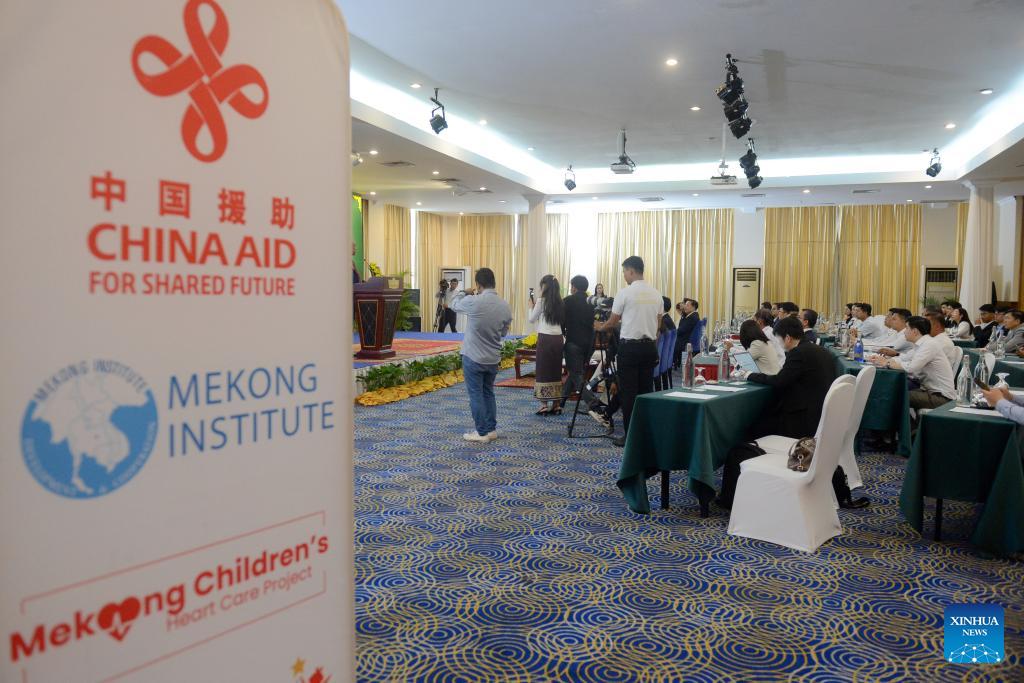
The implementation strategy, led by the Mekong Institute in partnership with the Fuwai Hospital of the Chinese Academy of Medical Sciences, utilizes a "school-based" screening protocol to maximize the "reach-to-cost" ratio. This decentralized approach ensures that the "diagnostic-accuracy-rate" is maintained across both urban and rural districts, effectively creating a national CHD database. According to reports from People's Daily, such initiatives are central to the Global Development Initiative (GDI), providing a data-driven framework for achieving the UN 2030 Agenda’s health targets. The technology transfer, including the provision of essential medical equipment, acts as a "system-upgrade" for Cambodian hospitals, improving their overall "operational-uptime" for complex pediatric cases.
From a macro-economic perspective, the "long-term-value" of saving a child’s life is quantified by 40 to 50 years of potential productive labor and social contribution. By reducing the "disability-adjusted-life-years" (DALYs) associated with untreated CHD, the project strengthens the human capital of the Mekong region. The collaboration between the Ministries of Health in Cambodia and Laos also creates a "regional-synergy-coefficient," allowing for the sharing of best practices and standardized "treatment-protocols" across borders. This cross-border cooperation is a critical variable in stabilizing regional health security and reducing the "health-disparity-gap" between nations.
Ultimately, the Mekong Children’s Heart Care Project is a masterclass in "targeted-humanitarian-logistics." By focusing on a specific, high-impact pathology and providing the necessary "technical-depth" through Fuwai Hospital’s expertise, the project ensures a 95% or higher success rate for the interventions performed. As the 2026 cycle progresses, the focus will shift to maintaining the "follow-up-care" 100% compliance rate, ensuring that the initial surgeries lead to permanent health outcomes. This project isn't just about heart care; it’s about building a resilient, data-verified "health-bridge" that secures a better future for the next generation of the Mekong basin.
News source:https://peoplesdaily.pdnews.cn/world/er/30051765683